
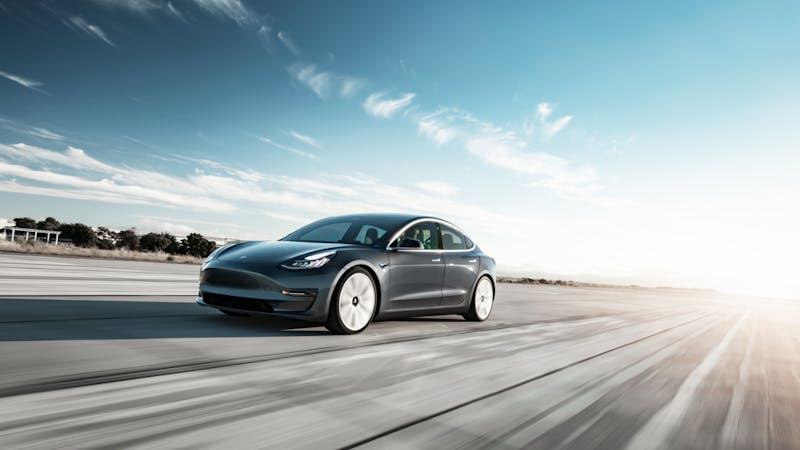
Tesla vehicles are generally seen as the gold standard for electric vehicles, and in terms of quality and performance, that’s not too far-fetched if we’re being honest. They make up a good percentage of the total vehicles on the road in California, for good reason. The brand’s electric vehicles tick every box including safety ratings, self-driving features, and futuristic designs. However, even the best automotive brands can have issues from time to time, and recent federal recall data through 2026 proves it.
If you’ve purchased a Model 3, S, X, Y, or even a Cybertruck and discovered that it has persistent problems, you may have a lemon on your hands, and you may need help to get rid of it. Lemon laws exist to protect consumers and make sure they can get a refund or replacement if the manufacturer can’t fix your vehicle.
Let’s explore how this law works in California and how you can protect yourself and your investment.
The Tesla Lemon Law in California
The Lemon Law Tesla follows protects consumers who have purchased or leased a new or used vehicle under a manufacturer warranty. If a car has a significant defect impairing its safety, use, or resale value, and the manufacturer is unable to fix the issue after multiple repair attempts, it may qualify as a lemon.
If your Tesla meets the requirements, you could be entitled to a full refund, a replacement vehicle, or cash compensation. In order to qualify for a Lemon Law claim on a Tesla, you must meet the following conditions:
- The car must still be under the manufacturer’s warranty
- The defect must substantially impair the use, value, or safety of the vehicle
- Tesla must have performed a reasonable number of repair attempts (usually at least two for a serious safety defect or four for other issues)
- The car must have been out of service for at least 30 cumulative days due to repairs
Common Issues Found In Tesla Lemon Law Cases
Tesla may be a leader in EV technology, but that doesn’t mean electric vehicles are immune to issues. Many owners have reported issues that impact their driving experience or put their safety at risk. Between 2021 and 2026, Tesla issued dozens of safety recalls covering the full range of Model 3, S, X, and Y. Some of the most significant problems found in these models are the following:
Battery and Charging Problems
Tesla’s electric powertrains are a key part of their appeal, but they can cause major problems when they fail. Some owners have experienced extreme battery degradation, charging failures at home, sudden range loss, and even battery fires. Since Tesla’s battery packs are costly to replace, this is one of the most serious issues an owner can face. The recall record backs this up: Tesla recalled certain 2023 Model 3 and Model Y vehicles over a defective pyrotechnic battery disconnect (NHTSA recall 23V-434), and more recently recalled 2025 Model 3 and 2026 Model Y vehicles because the battery pack contactors could fail and cause a sudden loss of drive power (NHTSA recall 25V-690).
Autopilot and Full Self-Driving (FSD) Malfunctions
Tesla promotes its Autopilot and Full Self-Driving (FSD) features as significant advancements, but these systems have drawn intense scrutiny from federal regulators. In December 2023, Tesla recalled more than 2 million vehicles across the Model S, X, 3, and Y lineup (NHTSA recall 23V-838) because the Autosteer system could allow driver misuse and fail to keep the driver engaged — the remedy was rolled out as an over-the-air software update. Earlier in 2023, Tesla also recalled vehicles running FSD Beta because the system could allow the vehicle to behave illegally at certain intersections, such as rolling through stop signs (NHTSA recall 23V-085). Owner complaints echo these concerns: in NHTSA’s public complaint database, Forward Collision Avoidance is the most-complained-about category for the 2023 Model 3, with owners reporting phantom braking and failure to detect obstacles or pedestrians. Other owners have reported steering errors when navigating curves or changing lanes, as well as unexpected system disengagements.
Touchscreen and Software Failures
Tesla relies heavily on software, which means glitches and failures can cause more than a headache. For instance, since Tesla uses a single screen to control nearly all vehicle functions, a faulty touchscreen can massively impact a car’s use. Software related recalls have continued in recently, including:
- A recall covering 2020-2023 Model 3 and Model Y, along with 2021-2023 Model S and X vehicles, because a software release caused the rearview camera image to be delayed when shifting into reverse (NHTSA recall 26V-283)
- A recall of 2024-2025 Model 3 and S and 2023-2025 Model X and Y vehicles after a computer circuit board short caused the loss of the rearview camera image (NHTSA recall 25V-002)
- A recall of 2018-2022 Model 3 and 2020-2022 Model Y vehicles because a factory reset could mute the Pedestrian Warning System (NHTSA recall 24V-153)
- Frozen or unresponsive touchscreens, malfunctioning climate control or navigation, and over-the-air updates that introduce new issues instead of fixing old ones — all commonly reported owner complaints
Build Quality and Structural Defects
Tesla has been criticized for poor build quality compared to traditional automakers, and the newest models haven’t escaped it. The 2026 Model Y alone has been recalled for improperly tightened seat back fasteners (NHTSA recall 25V-410), a horn ground wire that may not be secured (25V-490), wiring defects that leave the reverse lights dark (25V-658), windshield washer nozzles blocked by a hose connector (25V-359), and even vehicles built for a foreign market without knee airbags (26V-445). The 2024 Model Y was recalled because the weld attaching the seat recliner mechanism could fail (24V-886), and 2021-2023 Model S and X vehicles were recalled because the cabin doors could unlock during a crash (23V-862). Many owners have also reported misaligned panels and trim pieces, water leaks from doors, windows, or sunroofs, and loose or rattling parts. These issues may seem minor, but can affect the car’s resale value and durability.
Suspension and Steering Problems
Some Tesla owners have experienced serious suspension and steering issues. In 2025, Tesla recalled 2023 Model 3 and Model Y vehicles because the printed circuit board for the electronic power steering assist could fail, causing a sudden loss of power steering (NHTSA recall 25V-092). The 2022-2023 Model Y was recalled over a loose steering wheel fastener (23V-385), and the 2026 Model Y was recalled because front suspension lateral link fasteners may not have been properly tightened, allowing the link to loosen or separate from the sub-frame (26V-558). Excessive wear on suspension components, sudden loss of steering control, and clunking noises when turning or going over bumps are also commonly reported. These suspension failures can be dangerous and may qualify you for a Tesla Model X Lemon Law claim.
Safety System Defects
Beyond the headline issues, recent Tesla recalls reveal problems with core safety equipment. Tesla recalled 2021-2025 Model S and Model X vehicles because the driver’s airbag could tear during deployment (NHTSA recall 24V-967), and 2021-2023 Model S and X vehicles because the front seat belts may not be properly connected to the pretensioner anchors and could detach in a crash (23V-488). A 2024 recall covering 2021-2024 Model 3, S, X and 2020-2024 Model Y vehicles addressed a hood latch that fails to detect an unlatched hood, which can cause the hood to fly open while driving (24V-554).
What to Do If Your Tesla Is a Lemon
If you suspect your Tesla Model 3, S, X, Y, or Cybertruck qualifies as a lemon, don’t ignore the problem. Here’s what you should do to protect your rights and build a strong case:
- Document Everything: Keep detailed records of all repair orders, receipts, and any communication with Tesla. Include emails, messages, and phone call logs, and write down the dates of each repair attempt. Be sure to mention the issues for each visit and how long your car was in service. If a problem keeps coming back, take clear photos or video as proof. This documentation will be crucial as you file a Lemon Law claim.
- Give Tesla a Reasonable Chance to Fix the Issue: California’s Lemon Law requires you to give Tesla a fair opportunity to repair the problem. Take your vehicle to an authorized Tesla service center and ensure they document each repair attempt. If the same issue continues after multiple repair visits, or if your car is out of service for an extended period, you may have a valid claim. Keeping track of these details will strengthen your case.
- Consult a Tesla Lemon Law Attorney: Tesla is known for resisting Lemon Law claims, so having an experienced attorney can make a big difference. A Lemon Law attorney can review your case, handle negotiations with Tesla, and fight to get you the refund, replacement, or cash compensation you deserve. Since many Lemon Law attorneys work on a contingency basis, you typically won’t have to pay any upfront fees,meaning legal help is accessible for more people.
Winning a Tesla Lemon Law Case
The Tesla Lemon Law California has in place is one of the strongest in the country, and thousands of Tesla owners have successfully won claims. If your claim is successful, you’ll have a few options to choose from in terms of compensation:
- A full refund, including your down payment, monthly payments, taxes, and registration fees
- A replacement vehicle of equal value
- Cash compensation if you prefer to keep the car, but want reimbursement for its defects
- Attorney fees covered by Tesla, so you won’t have to pay out-of-pocket
Tesla’s vehicles may seem futuristic, but that doesn’t mean you have to tolerate dangerous defects or constant repairs. If your Tesla isn’t meeting expectations, you can count California’s Lemon Law and our skilled attorneys to help you fight back.
Don’t Let Tesla Leave You Struggling With a Lemon
No one wants to end up with a defective vehicle, but the Lemon Law can make things right. By keeping thorough records, giving Tesla a fair chance to make repairs, and following through with the claim, you can protect your rights as a consumer. When pursuing a Tesla Lemon Law claim, we suggest you contact a reputable lemon law firm like Quill & Arrow LLP. This is a trusted law firm with a proven track record of handling Lemon Law cases against the major automakers, including Tesla. With their expertise and client-focused approach, Quill & Arrow LLP can help you secure the best possible outcome and get you back on the road in a reliable ride.
