

Free Case Evaluation Find Out if You Have a Lemon Today
Our team will ask you simple questions to determine if we can help you receive a cash settlement or refund for your vehicle.
Check if You Qualify
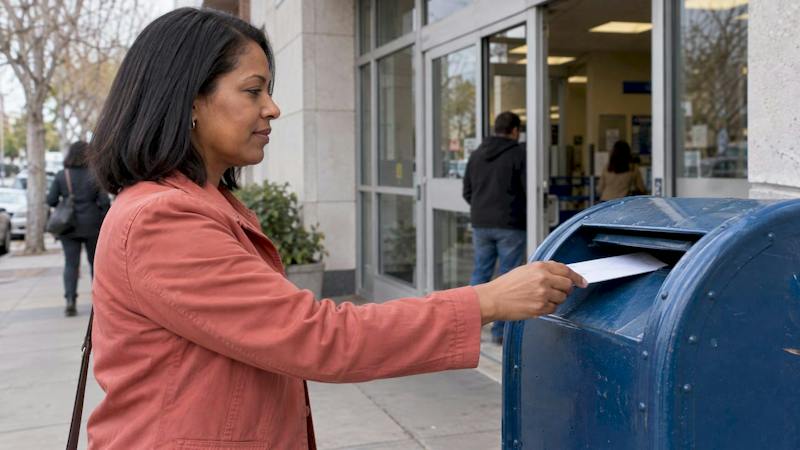
If the dealer keeps failing to fix the same defect, escalate in this order. First, document every repair visit. Second, send the manufacturer written notice at the address listed in your warranty booklet. Third, ask for a repurchase or replacement in writing. Fourth, use the manufacturer’s certified arbitration program or a state agency if you want a no-cost route. Fifth, talk to a lemon law attorney once the manufacturer misses a deadline or refuses. This guide explains each step and the California rules behind it.
Start with your paperwork: repair orders, the sales or lease contract and the registration are what every program asks for first.
Write to the manufacturer, not just the dealer. Participating manufacturers must publish a Lemon Law notice address on their website, in the owner’s manual and in the warranty booklet.
For manufacturers that opt in to California’s newer procedures, a written repurchase or replacement demand sent at least 30 days before suing starts a clock: an offer within 30 days and completion within 60 days.
Safety defects belong in a report to NHTSA as well. Reports from many owners can lead to an investigation or recall.
If the manufacturer stalls or lowballs you, a free case review costs nothing and shows whether your car qualifies as a lemon.
The dealership’s service department fixes cars under warranty, but the warranty is a promise from the manufacturer. When repairs fail, the real decision maker is the automaker’s customer relations or regional office. Escalation means moving your complaint from the service counter to the party that can authorize a buyback, a replacement or a cash settlement.
California’s Department of Consumer Affairs describes the basic path: read the warranty booklet, try to resolve the issue with the dealer, then contact the manufacturer directly. In some situations you must also tell the manufacturer in writing about the specific problems. Writing is the safe habit in every case, because it creates a dated record and paper trail.
A complaint backed by a paper trail moves faster than one made by phone. The state’s arbitration program asks for repair orders, the sales contract and the vehicle registration, and those documents are shared with the manufacturer and the arbitrator. Gather them now, whichever route you choose.
Keep these in one folder, paper or digital:
Every repair order, including visits where the dealer said “could not duplicate.” Check that the complaint you described is written on the order in your words.
Dates in and out of the shop, so you can total the days your car was not usable to you.
The sales or lease contract and registration.
Your warranty booklet, with the notice address and the coverage period marked.
Photos and videos of warning lights, noises, leaks or failures, with dates.
A log of calls and emails with the dealer and the manufacturer: who you spoke to, when and what was promised.
What will you need to show? The manufacturer-run program for California disputes lists the points your evidence should support: the problems exist, they are a manufacturing defect covered by the warranty, the manufacturer and dealer had a reasonable chance to repair, how many repairs and days out of service, and that the defect substantially impairs use, value or safety. Organize your folder around those five points and you have the core of any lemon law claim.
If you are unsure what counts as strong proof, our guide to building a strong California lemon law case goes through the evidence in detail.
Before you write to the manufacturer, know how California measures a “reasonable” number of repair attempts. The state’s Lemon Law presumption applies when, within 18 months or 18,000 miles of buying or leasing a new car, whichever comes first, any of these is true:
|
Situation |
Threshold |
|---|---|
|
Same problem not fixed |
Four or more repair attempts |
|
Problem could cause death or serious bodily injury if driven |
At least two unsuccessful repair attempts |
|
Time in the shop for warranty repairs |
More than 30 days |
The presumption is a guideline. A car that falls outside these numbers can still be a lemon, and the numbers do not replace the requirement that the defect substantially impair use, value, or safety. Certified pre-owned and used vehicles with remaining manufacturer warranty can also have rights; our page on used car lemon law explains how that works.
A phone call to a 1-800 number gets you a case number. A letter or email to the designated Lemon Law address gets you a legal record. Under California’s newer procedures, the manufacturer must place its Lemon Law notice information, including an email and/or mailing address, on its website, in the owner’s manual and in the warranty booklet, in English and Spanish.
Keep it factual and short, limited to one or two pages.
Your name, contact details, and the vehicle’s VIN, model, year and purchase or lease date.
The defect, described how it appears on your repair orders.
A table or list of each repair visit: date, mileage, dealer, what was done, days in the shop.
What you want: repurchase or replacement, stated clearly.
A copy of the key repair orders and the contract, with originals kept by you.
Send it in a way that proves delivery, such as certified mail with return receipt or an email with read confirmation, and keep the proof. Stay professional. The state-certified dispute program itself recommends a constructive and professional approach when presenting your case, and the same tone is to your benefit in a demand letter.

California changed how lemon law disputes can proceed with AB 1755 and SB 26. The Department of Consumer Affairs explains that manufacturers can opt in to the new procedures, use the existing Song-Beverly statutes, or be certified through its arbitration program. The department must publish the list of opted-in manufacturers each year by December 15, so check its page to see which category your automaker is in.
For a manufacturer who is opted in, the sequence works like this, according to the Department of Consumer Affairs:
You demand in writing that the manufacturer repurchase or replace the vehicle, at least 30 days before suing.
The manufacturer must acknowledge receipt of the request.
It must offer restitution or replacement within 30 days of receiving the notice, and complete it within 60 days.
Once you sign a release, it must process the agreed restitution or replacement within 30 days or daily penalties apply.
When you return the vehicle, it must pay the restitution amount, then the vehicle payoff, attorney’s fees and any civil penalties within one business day.
If it does not comply, you can sell the vehicle and sue.
This is why the date on your written demand matters. It is the first day of the clock, and a missed deadline is the moment the manufacturer’s position weakens.
Arbitration is optional and often not recommended. Though intended to be fair, the process tends to tip in favor of large auto manufacturers, who can use the same arbitrators repeatedely. Instead, we offer our aggressive litigation stragies that give our clients the upper hand. That said, below is how this process works if it is something you decide to pursue.
Arbitration is the manufacturer sponsored dispute process, and California oversees it through state certification. The Department of Consumer Affairs describes it as an informal, free option that does not require an attorney. To qualify, the problems should be covered by the original manufacturer’s warranty, remain unrepaired, and substantially decrease the vehicle’s use, value or safety.
The timelines are set by rule:
A certified program must give you a decision within 40 days of opening the claim, with stated exceptions.
If you accept the decision, the manufacturer must carry it out within 30 days of being told of your acceptance.
Under the federal Magnuson-Moss Warranty Act and FTC rules, eligible automotive warranty disputes must be processed and closed within 40 days and are free for consumers.
The arbitrator is an independent third-party neutral trained by the program administrator.
Hearings in the California program are conducted in English, and sign language interpreters are available under the Americans with Disabilities Act if you need one.
If you reject the arbitrator’s decision, the state says you may speak to an attorney about your legal options. Keep in mind that the state’s Arbitration Certification Program checks that programs follow the statutes and regulations, but it does not conduct hearings or overturn decisions.
Different agencies handle different problems. A federal guide to filing car complaints points owners to the state attorney general for warranty complaints, NHTSA for safety issues, the FTC or a state consumer agency for deceptive ads or dealers, and the CFPB for auto loans. Some agencies investigate individual complaints, and others collect them to support future cases against a company.
|
Agency |
Use it for |
What to expect |
|---|---|---|
|
California New Motor Vehicle Board |
Disputes with a new vehicle dealer, manufacturer or distributor, including warranty and repair disputes |
An informal, no-cost mediation program, also open for used vehicles with remaining original warranty sold by a new vehicle dealer |
|
NHTSA |
Safety defects |
Your report is posted publicly and analyzed for risk; it may lead to an investigation |
|
California Attorney General |
Consumer complaints and general information |
Does not give legal advice or represent you in a personal legal action |
|
CFPB |
Auto loan or payment problems |
Complaint about the lender, not the defect |
The Attorney General’s role is limited: its office cannot provide legal advice or represent consumers in personal legal actions, so you pursue your own remedy privately.
If the defect affects brakes, steering, airbags, stalling, fire risk or anything else that could hurt someone, report it to the federal regulator too. NHTSA’s process starts with a Vehicle Owner’s Questionnaire submitted online, by phone or by mail. All complaints are posted on NHTSA’s website, and the agency analyzes safety risk, severity, likelihood and the number of vehicles affected before deciding whether to open an investigation or monitor recalls.
One report alone may not trigger action, but NHTSA says similar reports from a number of people about the same product could indicate a safety-related defect. Manufacturers must then repair, replace, refund or, rarely, repurchase. For a plain-language look at what happens after you file, read about reporting a safety defect to NHTSA.
A NHTSA report does not replace your lemon law notice. They run on separate tracks, and filing both builds the record that a safety defect is real and recurring.
Remedies in a California lemon law case generally mean the manufacturer repurchases the vehicle (buyback) or replaces it. If the manufacturer’s failure to comply with the Song-Beverly Act was willful, California Civil Code section 1794© allows a civil penalty of up to two times actual damages. That penalty is one reason manufacturers take a documented, well-prepared claim seriously.
Name the remedy in your letter. A vague “please fix this” invites another repair attempt. A specific demand for repurchase or replacement tells the manufacturer you understand the process.
You do not need a lawyer to write a letter or to file for arbitration. Most owners who contact us, though, do so for one of these reasons:
The manufacturer ignored the written demand or missed the 30 or 60 day deadlines.
The offer is a partial refund, a goodwill credit or another repair attempt instead of a repurchase.
The manufacturer denied the claim, or an arbitration decision went against you.
The defect is a safety risk and you are still driving the car.
You are unsure whether your car is new, certified pre-owned or used for lemon law purposes.
The lemon law gives manufacturers a lot of room to argue, and an attorney who prepares every case for trial changes that conversation. If you want to see the full sequence, our lemon law process page walks through it, and our step-by-step guide to filing lemon law in California covers the paperwork.
We represent California car owners with defective vehicles, including new and certified pre-owned cars with recurring defects. Every case is prepared for litigation from day one, which gives you leverage with the manufacturer. We work on contingency, so you pay no out-of-pocket fees, and attorney fees are funded by the manufacturer. You also get real-time case tracking, so you always know where your claim stands.
If you have a folder of repair orders and a manufacturer that will not budge, start with a free consultation and case review. Visit our California lemon law page or learn about our defective car lawyers to see whether your vehicle qualifies.
Not necessarily, in fact we generally do not recommend arbitration. Arbitration through a certified program is optional and free, and you may speak to an attorney if you reject the decision. For opted-in manufacturers, a written repurchase or replacement demand at least 30 days before suing is the key step. Ask an attorney which path fits your manufacturer.
Use the Lemon Law notice address or email in your warranty booklet, owner’s manual or the manufacturer’s website. Manufacturers using the new procedures must publish it in all three places, in English and Spanish. Keep proof of delivery with your copy of the letter.
For manufacturers who opted in, it must acknowledge receipt, offer restitution or replacement within 30 days of the notice and finish within 60 days. If it does not comply, you can sell the vehicle and sue. Certified arbitration programs have their own 40-day decision timeline.
No. NHTSA reviews safety complaints to decide on investigations and recalls, and it does not resolve your individual warranty claim. Report safety defects there anyway, and pursue a repurchase through written notice, arbitration or an attorney.
Certified pre-owned and used vehicles with remaining manufacturer warranty can have lemon law protection, depending on the warranty and sale. Get in touch with us for a free case review and we will tell you where you stand.
Our team will ask you simple questions to determine if we can help you receive a cash settlement or refund for your vehicle.
Check if You Qualify