

Free Case Evaluation Find Out if You Have a Lemon Today
Our team will ask you simple questions to determine if we can help you receive a cash settlement or refund for your vehicle.
Check if You Qualify
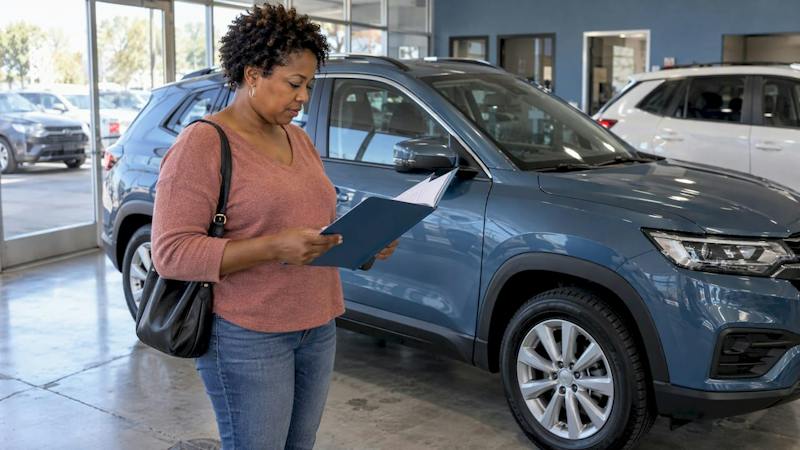
Sometimes a second owner can use California's Lemon Law, but the answer turns on one fact: whether the car came with a manufacturer's new-car warranty when you bought it. A certified pre-owned car sold with a manufacturer-issued warranty, or a former demonstrator or dealer-owned car, is in a very different position from a car bought from a private seller or an independent lot. This guide explains where that line falls, what repair history helps, and what to gather before you talk to a lawyer.
The statute does not use the phrase "second owner." It asks a different question: was the car a new motor vehicle, or a vehicle sold with a manufacturer's new car warranty, when you got it? Being the second person on the title is not what qualifies you or disqualifies you. What matters is the route the car took to you.
That is why two second owners can get opposite answers:
The California Department of Consumer Affairs lists what the law covers: cars, pickups, vans and SUVs, the chassis and drive train of a motor home, dealer owned vehicles and demonstrators, certain business vehicles, and vehicles bought or leased for personal, family or household use. All of them must come with the manufacturer's new vehicle warranty.
Notice that dealer owned vehicles and demonstrators appear on that list. A car that a dealership drove as a loaner or demo and then sold to you as the first retail buyer may still count, even though it has miles on it and you are not the first person to have driven it.
California courts have spent several years working out how the "new motor vehicle" definition applies to used cars. Three points are worth knowing.
A reseller sale can fall outside the refund remedy. In Rodriguez v. FCA US, LLC, the Court of Appeal explained that the replace-or-refund remedy in section 1793.2(d)(2) of the Song-Beverly Act is written for new vehicles. The plaintiffs had bought a previously owned truck from an unaffiliated reseller. The court held it was not a new motor vehicle for that provision, and noted that no warranties were issued at the time of sale. The California Supreme Court later took up the same dispute and, in 2024, also read the new-vehicle remedy narrowly for used cars that carried leftover factory coverage. Read the court's full opinion or talk to a lawyer before assuming a leftover factory warranty is enough.
A warranty in force at the sale can matter. In Stiles v. Kia Motors America, Inc. (2024), the Court of Appeal applied the statutory test: whether the car was a "motor vehicle sold with a manufacturer's new car warranty." The court examined allegations that a previously owned car was bought while some manufacturer warranties were still in effect. In short, the wording of the warranty, who issued it, and when it was issued all get examined.
The facts of your sale control. Courts look at documents, not impressions. A salesperson saying "it's still under warranty" is less useful than a signed certification form or a warranty issued in your name at the time of sale.
These cases are why we review the purchase file before predicting an outcome. Case law in this area has moved quickly, and two cars with the same make and mileage can land on different sides of the line.

Use this table as a starting map for your situation. Your contract and warranty booklet decide the real answer.
| How you bought the car | What to look for | Where you generally stand |
|---|---|---|
| Certified pre-owned from a franchised dealer | A manufacturer issued certified warranty, signed at the sale | Often the strongest used-car position. See our guide on whether certified pre-owned cars qualify |
| Former demonstrator or dealer-owned car | A new car warranty issued with the sale | Listed by the state as a covered category |
| Used car from a dealer with a dealer or third-party warranty | Who backs the warranty: the dealer, a third-party company or the manufacturer | Depends on the issuer. Our article on whether a used car warranty qualifies for Lemon Law explains the difference |
| Private-party purchase, factory warranty still running | No new warranty issued to you at the sale | Courts have treated these sales narrowly. A review of the facts is essential |
| Purchase from an unaffiliated reseller | Whether the reseller extended any warranty | The Rodriguez court found the new-vehicle remedy did not apply |
If you are unsure which row describes your car, bring us the paperwork. The used car Lemon Law page outlines how we assess these purchases.
Even when your car qualifies, you still have to show that the manufacturer had a fair chance to fix a serious warranty defect and could not. California does this through a presumption. The state says that a vehicle is presumed to be a lemon if, within the first 18 months or 18,000 miles, any of these happens, as laid out in the Department of Consumer Affairs Q&A:
The Attorney General's consumer guidance describes the same thresholds. It adds that where the warranty or owner's manual requires it, you must notify the manufacturer directly, and that the car must have been taken to the manufacturer or its agents for repair.
The presumption is a shortcut, not the only route. A car that falls short of these numbers can still be a lemon if the manufacturer failed to fix a defect after a reasonable number of attempts. For a second owner, a few practical points follow:
If your car qualifies and the defect cannot be fixed, the manufacturer must replace the vehicle or refund the purchase price, whichever you prefer. The California DMV describes the same obligation in its guidance on Lemon Law buybacks: replace the vehicle or make restitution when it still does not conform to the warranty after a reasonable number of attempts.
As quoted in Niedermeier v. FCA US LLC, restitution can cover the actual price paid or payable, including transportation charges and manufacturer-installed options. It can also cover collateral charges such as sales or use tax, license and registration fees and other official fees. Incidental damages such as reasonable repair, towing and rental car costs you actually paid can be added.
Keep every receipt. Tow bills, rental invoices and registration payments are part of what you may ask for.
A refund is reduced to account for the miles you drove before the first repair attempt for the defect. The same case describes the statutory formula: the actual purchase price multiplied by a fraction. The denominator is 120,000. The numerator is the number of miles the car traveled before you first delivered it to the manufacturer or its authorized repair facility to fix the problem.
Here is a simple illustration, with invented numbers. If you paid $30,000 and the car had 12,000 miles when you first took it in for the defect, the offset would be $30,000 × (12,000 ÷ 120,000), or $3,000. Your actual figures depend on the contract, the miles counted and any add-ons, so treat this only as a way to see the mechanics of how the offset is calculated.
A note on timing: California changed the procedure for many Lemon Law lawsuits in 2025, including notice and mediation steps and filing deadlines for some manufacturers. Whether those rules apply to your claim depends on the manufacturer and the vehicle, so do not wait to have your file reviewed.
The Attorney General's office says full-time active-duty members of the Armed Forces who were stationed or living in California at the time of purchase or lease are protected even if the vehicle was bought or registered outside the state.
A vehicle handed down or sold within a family is not a sale by a dealer, and no new warranty is issued to you. That generally puts the car outside the new-vehicle remedy. Our overview of California used car laws covers the rights you may have in a sale like this one.
The state lists certain business use vehicles as covered, alongside personal, family and household purchases. If you bought the car for a small business, bring the registration and purchase details to your review.
Second owner cases are decided on paperwork, so they need a lawyer who reads the contract and warranty before making promises. At Quill & Arrow Law, we offer a free consultation and case review. We handle qualifying cases on a contingency basis, so you owe no out-of-pocket fees, and attorney fees are sought from the manufacturer rather than from you. You can read how that works in our explanation of lemon law attorney fees.
We prepare every case as if it will go to trial, which is our way of giving you leverage against a large manufacturer. You also get real time case tracking, so you can see where your claim stands without chasing anyone.
If you bought a used or certified pre-owned car in California and it keeps returning to the shop, start with our Lemon Law team or learn more on the defective car lawyer page. Send us your purchase contract and repair orders and we will tell you where you stand. If you want more background first, read our guide to Lemon Law for used cars or the Lemon Law FAQs.
It can, when the car is sold with a manufacturer's new car warranty, as with some certified pre-owned cars and dealer demonstrators. The state says the law covers used vehicles for which a manufacturer's new car warranty is issued with the sale. A used car bought without such a warranty is much harder to fit into the law. Our page on whether the Lemon Law applies to used cars goes deeper.
Not as a separate rule. The 30 days is one of the repair-history triggers for the lemon presumption: a car in the shop for more than 30 days in total, not necessarily in a row, for warranty repairs. The days do not need to be consecutive. Other triggers are four or more attempts on the same problem or two on a safety defect.
Sometimes a claim against the seller exists apart from the manufacturer remedy, depending on what the dealer promised or warranted in writing. The facts of the sale matter a great deal, including any written warranty and what the contract says. Bring the contract to a lawyer for review before you decide how to proceed.
No. What counts is whether a manufacturer's new-car warranty came with your purchase. Plenty of second owners meet that test through certified pre-owned programs or demonstrator sales. Many others do not, so the paperwork is the first thing to check
Our team will ask you simple questions to determine if we can help you receive a cash settlement or refund for your vehicle.
Check if You Qualify